3 Reasons Why All Types of Families are Important


Families are so important because we are born into them, marry into to them, and even create them among the people we love. 

They come large and extended or small and nuclear. But whatever their size or wherever they live, strong families give us the nurturance and strength we need in order to survive.

1. Family of Orientation 
To expand upon the above, throughout our lives, most of us find ourselves living in two types of families -- our family of orientation and our family of procreation. 

Our family of orientation is the family in which we were born into. We had no choice as to who our parents would be nor the genes we would inherit. In addition, we had no say in our early intellectual stimulation or in how our emotional or survival needs would be met.

Our family of orientation, nevertheless, is the institution that hopefully gave us the sense of stability and protection that we all need. We had to rely on our family of orientation to provide the nourishment, shelter, and assistance in learning how to walk, talk, and eat. In the context of early stimulation, we also relied on the family of orientation to learn the basics of our language. In America, it's our basic alphabets, our basic numbers, how to formulate simple sentences, and how to build on our vocabulary throughout childhood and the rest of our lives. At best the family teaches the finest things human beings can learn from one another -- generosity and love. But, it is all too often where we learn nasty things such as hate, rage and shame.

2. Family of Procreation. 
The difference between the two is substantial. The choices which led up to this family of procreation is solely yours. When you married, you had to choose the one you married. Included with that individual's looks, personality, abilities, knowledge and interests was all of his relatives and perhaps even his children. Hopefully, that individual did not bring with him baggage from his family of orientation or previous relationships, but rather positive experiences from one of the other or both.

Foundation of Society
The institution of the family is decisive in determining not only if you have the capacity to love another individual but in the larger social sense whether you are capable of loving your fellow man collectively. The whole of society rest upon this foundation for stability, understanding, and social peace. But however the forms of family life have changed and the number expanded, the role of the family has remained constant and it continues to be a major institution to which children pass en route to adulthood.

Children thrive in a variety of family forms; they develop normally with single parents; with unmarried parents; with multiple caretakers in a communal setting; and, with traditional two-parent families. What children require is loving and attentive adults, not a particular family type.


Comments are Welcome?  Leave them Below.

Enhanced by Zemanta

3 Things You Can Do To Improve your Children’s Grades


Does your style as a parent affect the grades your children receive in school? Is there anything that you, as the parent, can do to help your children improve their grades?

The answer to both these questions is a definite yes.

According to a Stanford University study, there is a relationship between parents' actions and their children's school performance. Parents can, and do, have an influence on their children's grades. 

Here are three actions you can take do to help your children get higher grades in school:

1.Be firm, yet encouraging. Set reasonable guidelines for your children and stick to them, but also take the time to explain the reasons for the rules. Try to give your children the sense that you have confidence in their capabilities and that you know they are trying. Even if they aren't always trying their hardest, they may put more effort into their work knowing you think so highly of them.

2. Communicate. Talk with your children in terms they can understand. Explain to them why you think school is important and why they need to do their homework. It may not make math any easier, but at least they know that you value what they are doing. And take time to really listen to what they have to say. You can let them know you're listening by giving a one-sentence summary of what they said before going on to what you want to tell them.

3. Let them play. Unlikely as it may seem, participation in school sports is associated with better grades. This is because children use play as a way of learning, rather than just as a diversion, as most adults do. They also have more energy than most adults and need a constructive outlet for it.

Now learn 3 more things you can help your children improve their grades.


Your Thoughts. Leave your comments below


Want an Exceptional Student? Here's the One Thing You Can Do

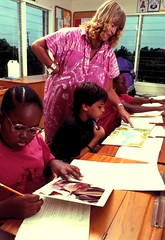
Teacher instructing pupils in their classroom

In their book, Pygmalion in the Classroom, psychiatrists Robert Rosenthal and school principal Lenora Jacobson describe a study they did involving children from kindergarten through fifth grade. They told the children’s teachers which students in their classrooms had “exceptional learning abilities.

But the teachers did not know that the researchers had chosen these “exceptional” students at random. When the students were tested at the end of the school year, the students who the teachers had been led to believe had exceptional learning abilities had made much greater academic progress than their peers.

In essence, the teachers had been programmed to expect more from certain students, and these students thus expected more of themselves and delivered.

The message here for teachers is that you get what you expect.

Expect the best from your students and you’ll get the best. And, above all praise the efforts. The results will come. This is great advice for parents also.

What are your thoughts. Leave your comments below.
Enhanced by Zemanta